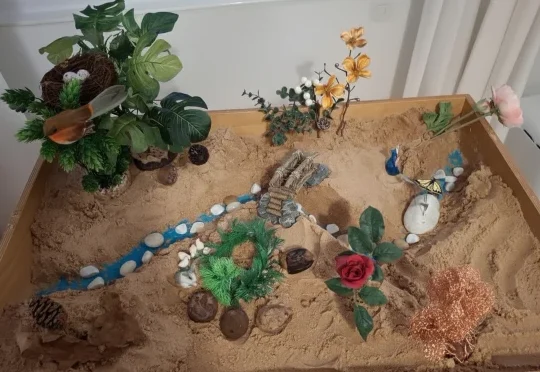
About Creative Therapies
Sometimes people say: 'I feel stuck', or 'There is too much going on', or 'I cannot bear to talk about it but want it out of my head': creative therapies may help people to describe in the sand or on paper what they would otherwise not be able to vocalise or address in traditional talking therapy alone. Having used this therapeutic tool both with clients and as a self-supervision tool myself, I never cease to be amazed at its powerful potential for revelation and the insights that can be gained.
Pastels, Crayons or Felt-tips as an Expressive Therapeutic Tool
I find this can be a wonderfully freeing way to express anything and everything with no judgement and sometimes even no set intention.
How it works:
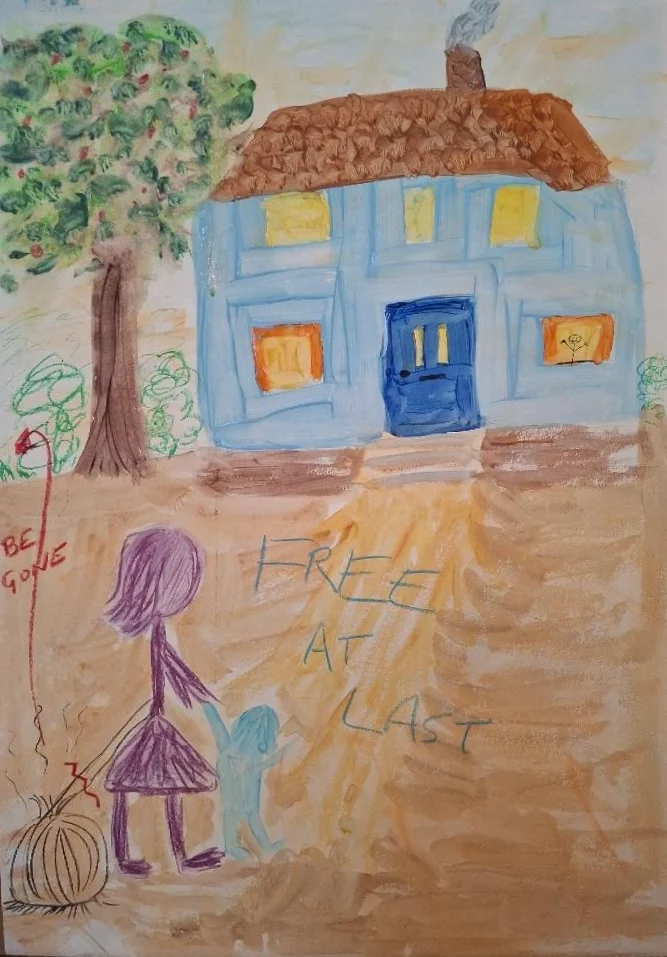
'It helps me to understand my emotions; my sub-conscious identifies what drawing or painting I need to do.'
Female Client, 20s
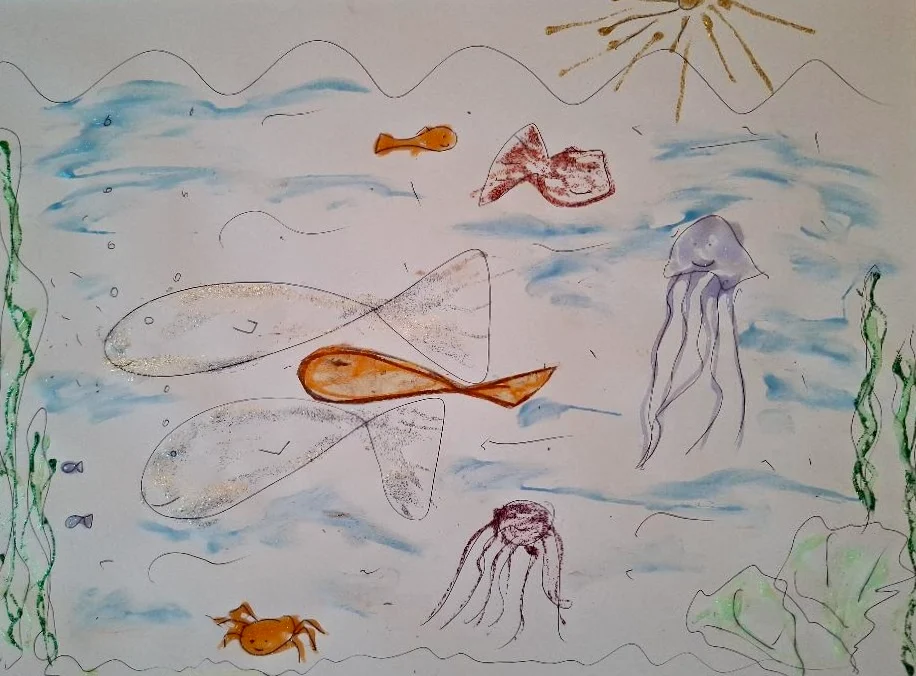
Depicting known or unconscious, half-understood thoughts and feelings on paper, making them visible and thus more concrete, can be like a partial ousting of the confused feelings. Seeing them there often brings about increased clarity and leads to deeper understanding.
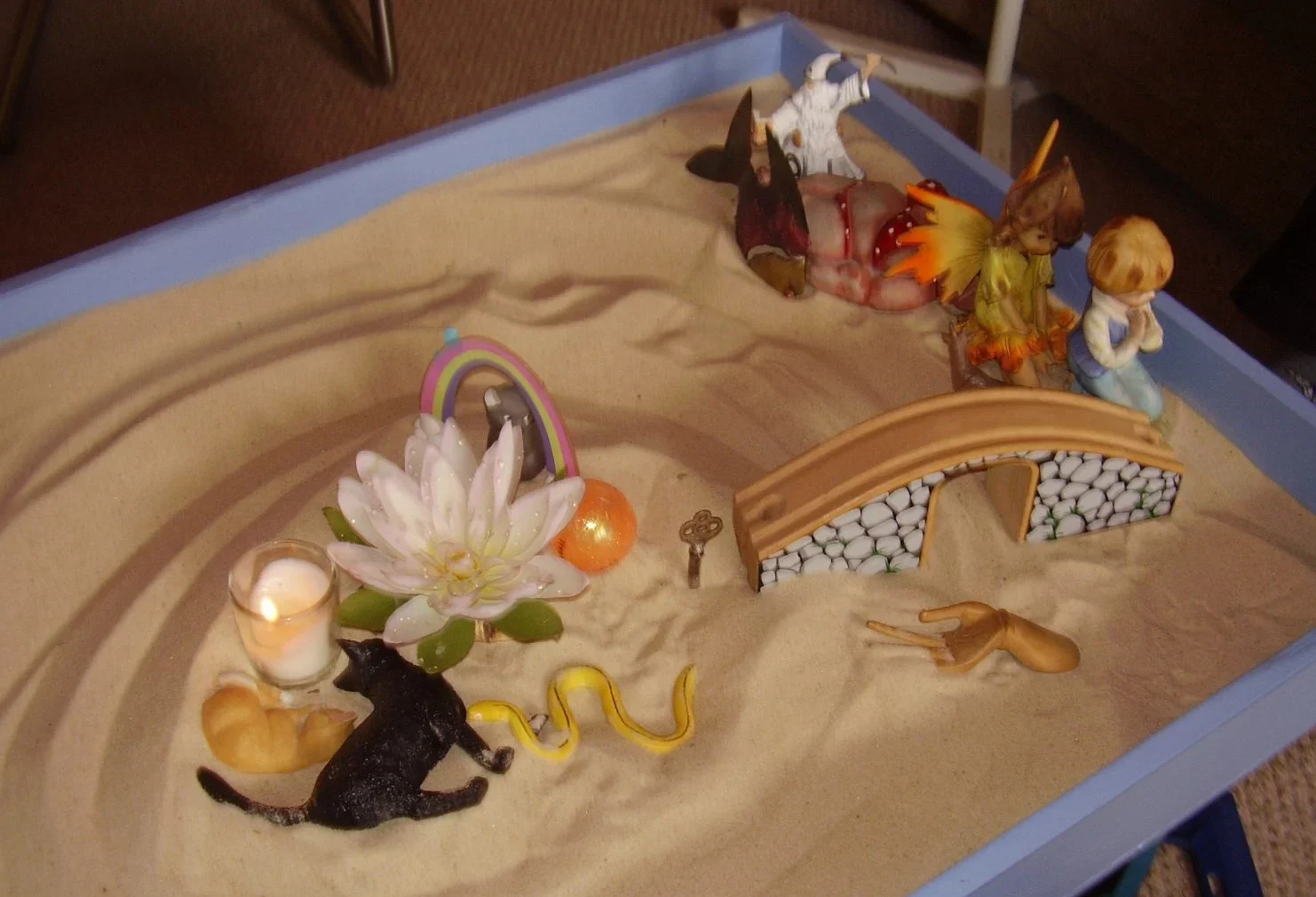
'I am always surprised at how simple and yet how profound each sand tray is.'
Female Client, 50s
Sand Tray as an Expressive Therapeutic tool
This is a reflective tool which can be profoundly effective for people of all ages. It is a form of expressive therapy, similar to incorporating drawing exercises into counselling sessions, but instead of drawing a picture, one builds up a picture in the tray using figures or miniatures.
That’s to say, miniatures of everyday objects such as people, animals, buildings, plants, symbols, the elements, etc. are selected as a conscious or unconscious representation of aspects of one’s life, mind or emotional state.
This makes it possible, by means of these figures and the arrangement of the sand, to set up a three-dimensional visual world corresponding to one’s internal world.
Sand Tray can be a good starting point, or a way to pause one’s thoughts by just putting 'everything on the table', without having to deal with it either immediately or all at once. It can also be a lighter, more circumspect approach and can be used directively or non-directively.
The outcomes of using Sand Tray: